
Introduction
Hot flushes are not just menopause, although they are commonly associated with it — an assumption that is often incomplete.
Sudden waves of heat, sweating, palpitations, and flushing can also occur in younger women and in men.
These symptoms are misunderstood or dismissed as anxiety, stress, or ageing.
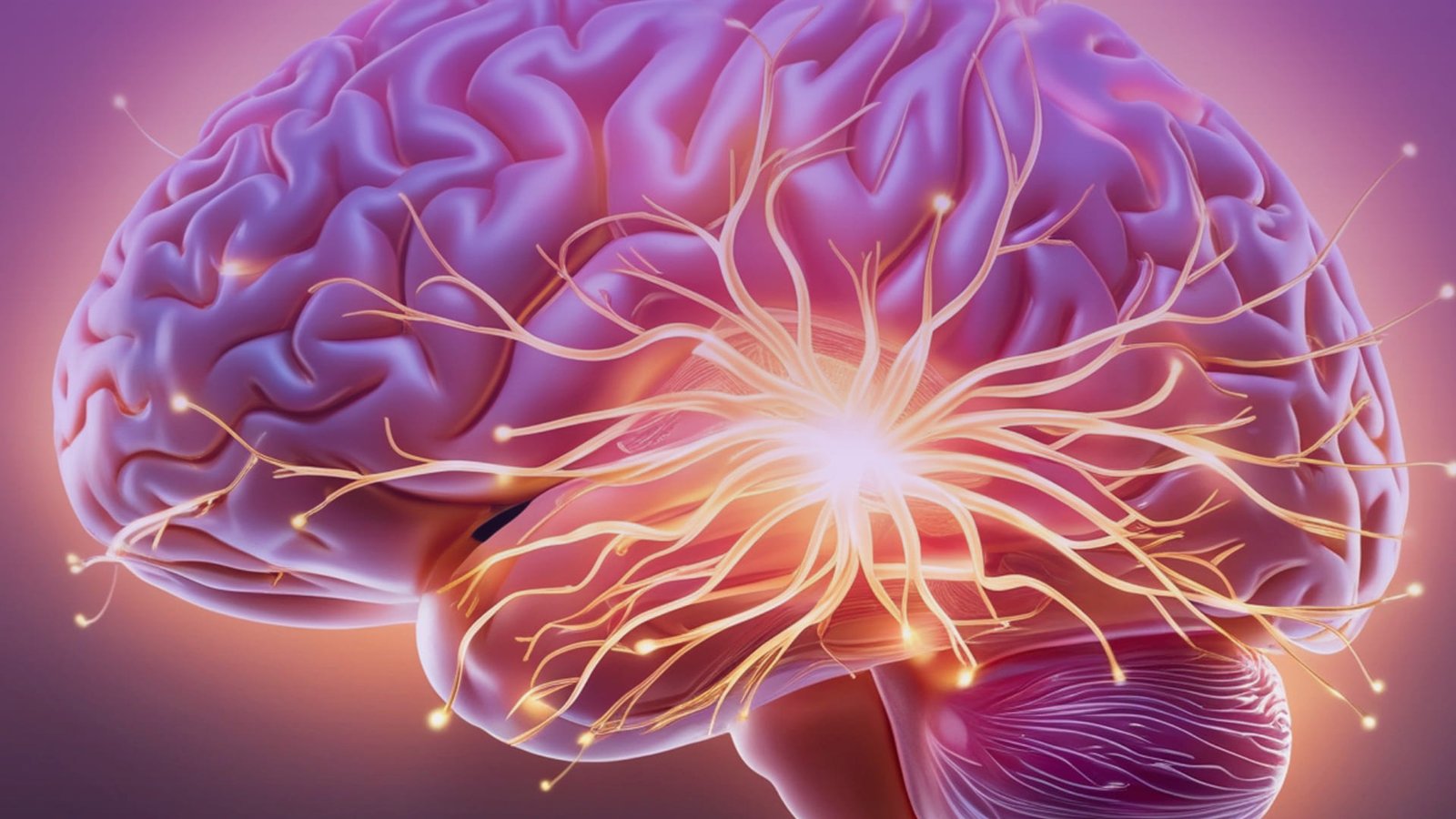
In reality, hot flashes reflect changes in how the brain regulates temperature. Menopause is only one of several contexts in which this can occur.
Guide Overview
This article will help you understand:
- How hot flushes may present
- Why hot flushes occur outside menopause
- How hot flushes can affect men
- How hot flushes can affect younger women
PART 1 — How Hot Flushes Feel In and Outside Menopause
Hot Flushes do not Always Present as Obvious Sweating or Redness

Many people experience them without realising what they are. They may include:
- Sudden anxiety or inner agitation– appears abruptly and resolves quickly once the episode passes
- A sudden wave of internal heat– rising through the chest, neck, or face
- Palpitations or a racing heartbeat– often occurring together with the heat surge
- Facial flushing or a sense of warmth– sometimes without visible redness
- Sweating — or intense heat without sweating
- Goosebumps or chills following the heat surge
- Night-time heat, sweating, or chills that disrupt sleep
- Difficulty falling asleep due to heat, restlessness, or sudden arousal
These episodes are often described as anxiety, poor sleep, or feeling unwell, rather than recognised as hot flushes.
If these symptoms feel familiar, a medical consultation may help. Click here.
PART 2 — Why Hot Flushes Happen Outside Menopause
Hot Flushes are a Form of Vasomotor Symptoms
They occur when the brain’s temperature regulation centre — located in the hypothalamus — becomes overly sensitive.
Sex hormones — including oestrogen and testosterone — normally help stabilise this system. When hormonal signalling becomes instable or disrupted, even small internal changes can trigger exaggerated heat responses. This mechanism is not exclusive to menopause.
The same biological process can occur:
- in men, it can occur when testosterone signalling is reduced, blocked or ineffective.
- in younger women, it can occur when oestrogen production or signalling is suppressed or dysregulated.
The trigger differs, but the brain response is shared.
PART 3 — Hot Flushes in Men
Hot Flushes in Men are Under-Recognised but Well Documented.
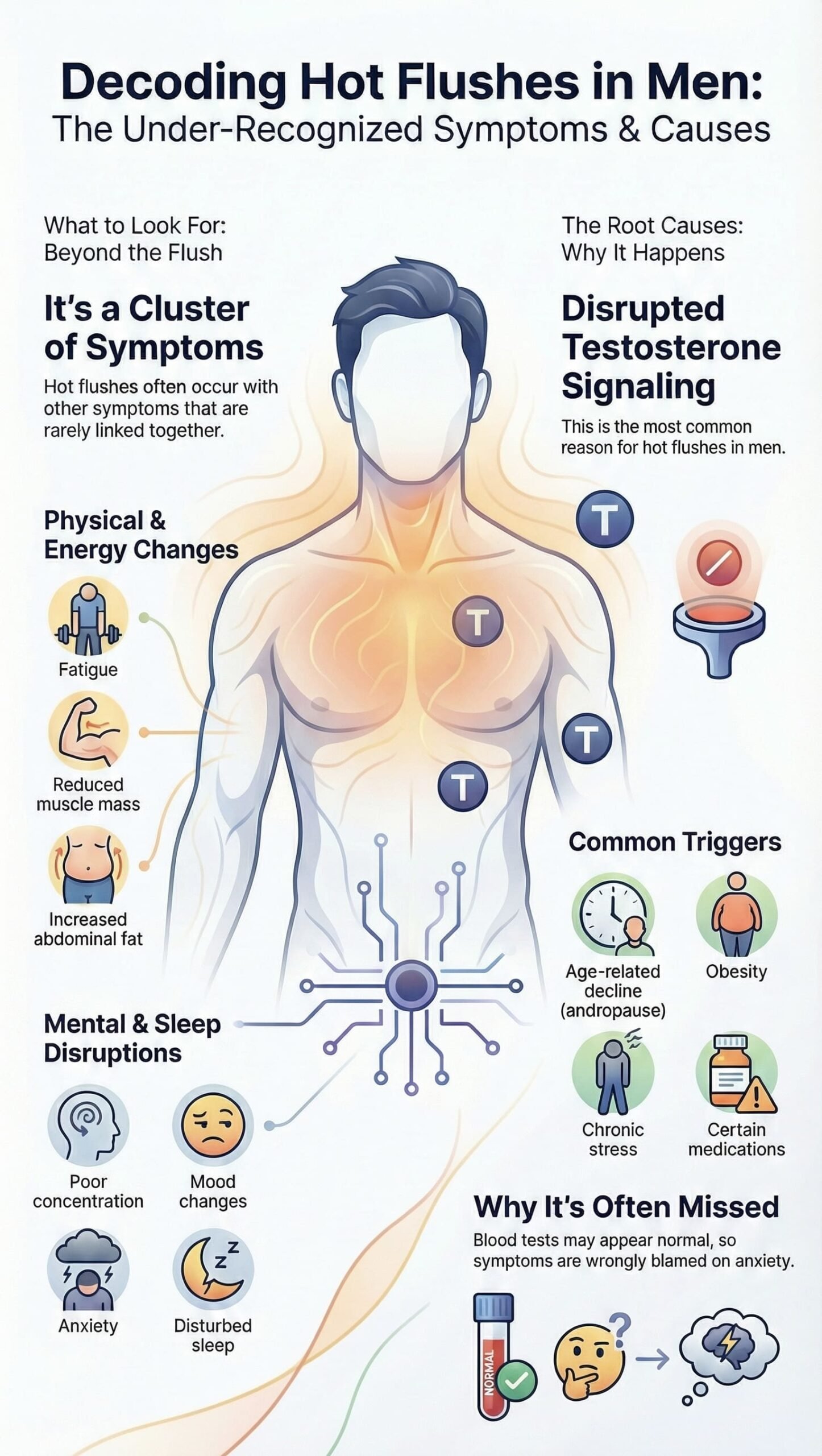
In men, hot flushes often occur alongside other symptoms, but these are rarely linked together and are frequently attributed to ageing or stress.
Some of the symptoms that may accompany hot flushes include:
- Fatigue and low energy
- Increased abdominal fat
- Mood changes, anxiety, and irritability
- Sleep disturbance
- Night sweats
- Reduced muscle mass
- Reduced libido
- Poor concentration or memory
Hot flushes in men are most commonly seen when testosterone signalling is reduced or disrupted.
Some common contributors include:
- Andropause — gradual age-related decline in testosterone signalling
- Obesity and metabolic dysfunction (increased aromatisation and impaired testosterone signalling despite normal blood levels)
- Medications that block testosterone action (e.g. finasteride, spironolactone, anti-androgens)
- Chronic stress, chronic illness, or sleep apnoea (hypothalamic–pituitary suppression and disrupted hormonal signalling)
- Medical hormone suppression (e.g. prostate cancer treatments)
This explains why blood tests may sometimes appear normal, symptoms are often misattributed to anxiety or ageing, and hot flushes can occur without obvious biochemical testosterone deficiency.
PART 4 — Hot Flushes in Younger Women
Hot Flushes in Younger Women can Occur when Ovarian Hormone Signalling is Reduced or Disrupted
- Sudden anxiety/inner agitation or low mood (often treated as “psychological” first)
- Irregular, infrequent, or absent periods
- Low energy, reduced concentration, irritability
- Cold intolerance, low libido, vaginal dryness (not always volunteered)
- History of restrictive eating, dieting, or high training load
- Bone stress symptoms (recurrent shin pain, stress fracture history) or early bone loss risk
Hot flushes in younger women are most commonly seen in:
- Low energy availability (high exercise + not enough fuel) — often in women training hard
(RED-S / Female Athlete Triad spectrum)
- Stress/weight-loss related cycle switch-off (periods stop after weight loss, intense training, or high stress)
(Functional hypothalamic amenorrhoea — FHA)
- Primary ovarian insufficiency (ovaries stop working normally earlier than expected; can be intermittent at first)(POI)
Key Takeaway
Hot flushes and related symptoms are often misattributed to anxiety, stress, or burnout—particularly in younger women and men—leading to delayed diagnosis and inappropriate treatment. Recognising the hormonal and neuroendocrine basis is essential for effective management.
Dr Maria Zalazar
Medical Director and Founder- MZ Medical
Can men experience hot flushes?
Yes. Hot flushes can occur in men when testosterone signalling is impaired. The most common cause is visceral fat, which converts testosterone to oestrogen and reduces its brain effect.
Can hot flushes happen without menopause?
Yes. They reflect hormonal disruption, not age, gender or menopausal status alone.
Are hot flushes always visible?
No. Many people experience them as sudden anxiety, palpitations, or night-time awakenings, without obvious flushing — which is why they are often mislabelled as anxiety.