
Introduction
Waking up at night during perimenopause is one of the most common sleep complaints in women in their late 30s and 40s.
Sleep is usually automatic. We go to bed, fall asleep, and wake up without thinking about it.
When night-time sleep becomes something you start managing, fixing, or medicating, something has changed.
Many women wake up repeatedly at night during perimenopause and are told it is insomnia or stress. In reality, for many women, it is neither. These awakenings are often driven by hormonal changes that disrupt sleep stability.
Guide Overview
This article will help you understand:
- How sleep disturbance presents during perimenopause
- Why sleep becomes disrupted
- What habits can make night symptoms worse
- Medical and non-medical options that can help
PART 1 — How Sleep Problems Present During Perimenopause
Many Women Who Have often Tried Magnesium, Alcohol, or Sleep Aids, often with Inconsistent Benefit Recognise this Pattern:
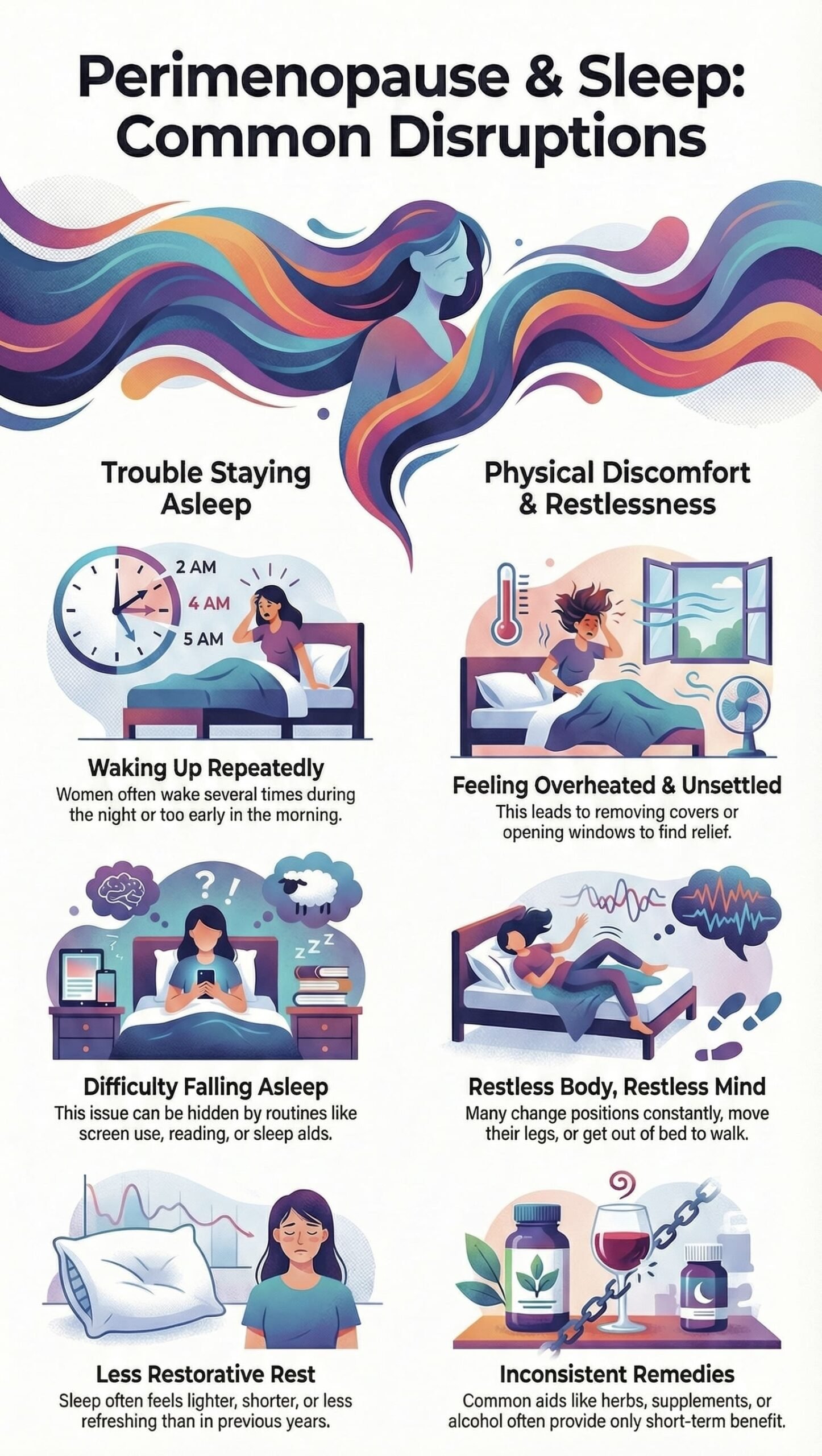
• Waking several times during the night
• Difficulty falling asleep, often unrecognised because it is compensated for by routines or aids (e.g. herbal teas, reading, screen use, alcohol, or melatonin)
• Feeling overheated or unsettled in bed
• Removing covers or opening windows to cool down
• Repeatedly changing position or moving the legs
• Getting out of bed to walk, eat, or distract the mind
• Feeling tired but unable to maintain sleep
• Waking early in the morning and being unable to return to sleep• Sleep that feels lighter, less restorative, or shorter than in previous years
Many women try magnesium, herbal remedies, alcohol, or sleep aids, often with inconsistent or short-term benefit.
You do not have to manage this alone — click here for a medical consultation.
Read more about sleep problems in menopause here
Part 2 — Why Sleep Becomes Disrupted During Perimenopause
Sleep Changes Explained Simply
Oestrogen
During perimenopause (and post-menopause), changes in oestrogen affect the brain area that regulates body temperature. When this system becomes unstable, even small internal temperature changes can trigger vasodilation, sweating, chills, and awakenings. This group of symptoms is called vasomotor symptoms.
When they occur during the day, we call them hot flushes.
When they occur at night, we call them night sweats.
What many women don’t realise:
Sleep disruption and hot flushes are driven by the same underlying process.
Progesterone
In addition, declining progesterone — one of the earliest hormonal changes — reduces the brain’s natural calming signals. This contributes to lighter, more fragmented sleep, even in women without obvious hot flushes.
However, not all progesterone acts the same way. There are different types and formulations — synthetic and bio-identical; oral, transdermal, or intrauterine — with very different effects on sleep and the nervous system. Only specific forms reliably provide this calming benefit.
You can read more about micronised progesterone here
Cortisol
Fluctuating oestrogen and declining progesterone also dysregulate cortisol, increasing night-time alertness and suppressing melatonin, which further destabilises sleep.
Part 3 — What often Makes Night Symptoms Worse
When Night-Time Symptoms Occur, Many Women Try to Cope — but Some Strategies can Worsen Health Over Time
Common examples include:
- Turning on bright lights (phone, TV, kitchen lights → ↑ cortisol, ↓ melatonin)
- Eating during the night, especially sweet foods (disrupts metabolic regulation)
- Using alcohol to fall back asleep (fragments sleep architecture)
- Overheating the bedroom (especially after shivering or in women with low thyroid function)
- Using magnesium or melatonin: magnesium may cause gastrointestinal discomfort; escalating melatonin doses (e.g. 3–5–10 mg) can shift circadian timing and fragment sleep
- Taking sedating antihistamines (can worsen dry mouth and brain fog — symptoms already common during perimenopause)
- Using sedative or anxiolytic medications (e.g. diazepam, alprazolam, zolpidem), which sedate but fragment sleep and are associated with cognitive decline with long-term use.
Part 4 —Waking up at night during perimenopause - Medical and Non-Medical Options
Practical, Evidence-Based Solutions for Sleep Problems in Perimenopause
1. Hormonal treatment (HT)
HT is not used to treat insomnia itself.
However, when sleep disturbance is driven by hormonal changes, addressing the underlying hormonal mechanism can significantly improve sleep stability.
2. Nutrition and weight optimisation
Hormonal changes can alter food tolerance, leading to bloating or discomfort that disrupts sleep.
Weight gain — especially visceral fat — can worsen reflux and overheating, further fragmenting sleep.
Targeted nutrition and, when needed, gradual weight optimisation can reduce these triggers and improve sleep quality.
3. Exercise
Regular exercise supports sleep, but intense exercise late in the evening can delay sleep onset and reduce sleep quality.
Morning or daytime exercise — ideally finishing at least four hours before bedtime — supports better night-time sleep
4. Cognitive behavioural therapy for sleep (CBT-I)
CBT-I helps reduce sleep anxiety and unhelpful sleep behaviours, improving coping strategies — particularly for women who cannot or do not wish to use hormones.
Key Takeaway
Waking at night in perimenopause is not a sleep flaw.
It reflects hormonal and stress-related changes that need targeted support.
Find the best approach to improve your sleep

Dr Maria Zalazar
Medical Director and Founder – MZ Medical.
Do I need treatment if I still have periods?
Treatment decisions are based on symptoms, health impact, and prevention needs — not on whether periods are still present.
Can vasomotor symptoms occur without hot flushes?
Yes. Many women experience sleep disruption without obvious hot flushes.
• Can hot flushes or sleep disturbance affect my health?
Yes. Vasomotor symptoms are associated with insulin resistance, higher fasting glucose, increased visceral fat, adverse lipid profiles, and metabolic syndrome.